Range of emotions

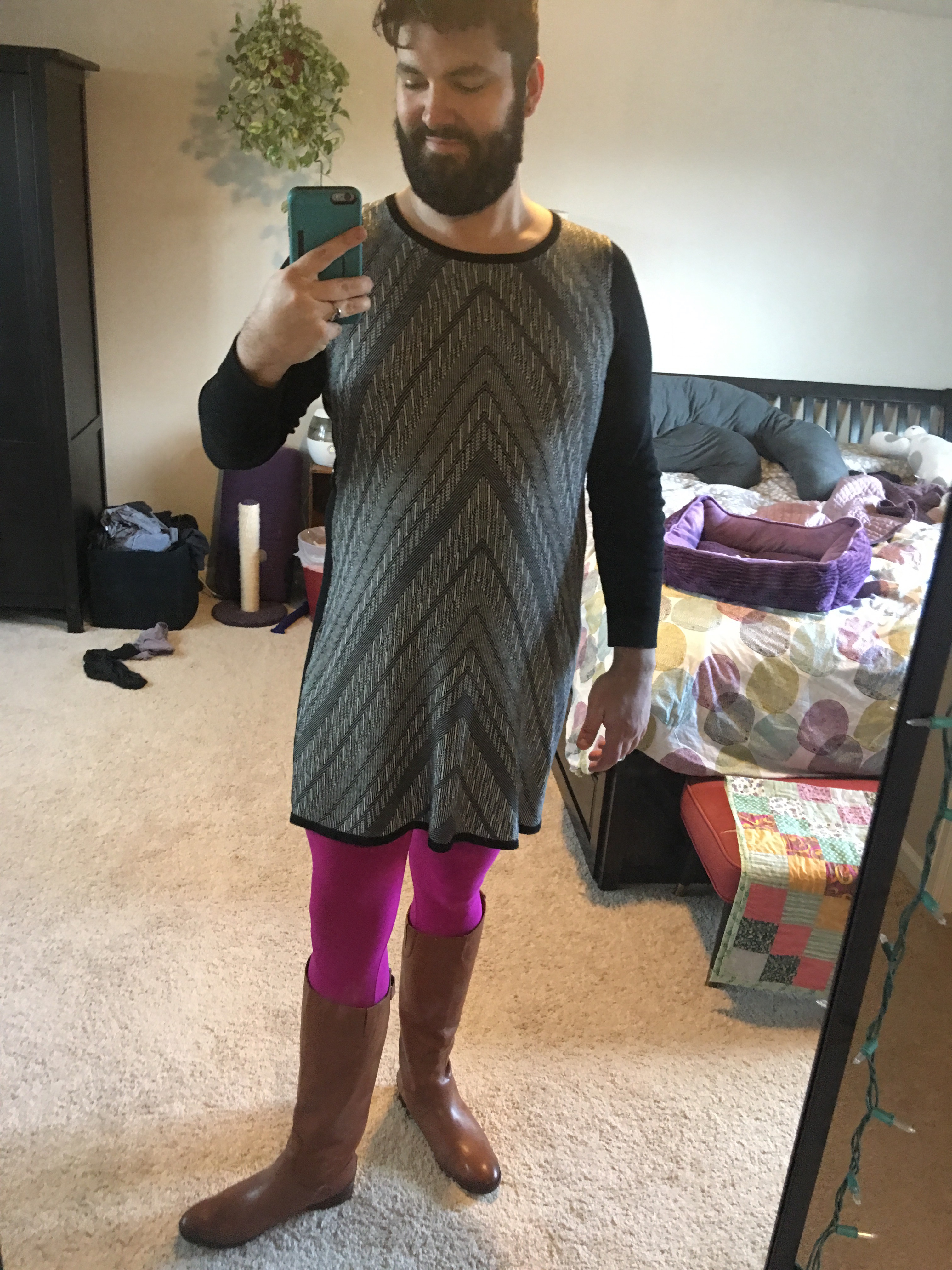
It’s amazing the range of emotions about gender that I can have just in the space of 90 minutes. I was almost late for work this morning because the first outfit I tried on was pinging my gender dysphoria and after hemming and hawing for far too long I finally decided to switch outfits. Something about the loose fitting slacks and the way my shoulders seemed to stand out just wasn’t working for me. I felt bad about not being able to wear an outfit that was probably really cute, at least according to my partner.

But I ended up switching to some tight fitting jeans, a floral top, and my black heel boots and now I feel sexy as fuck. On a whim I grabbed my new subtle lipstick as I walked out the door and I was feeling so confident by the time I got to work that I applied it in the men’s room. It felt so wonderfully subversive which for me is what being genderqueer is all about. Now I feel powerful and confident in my gender and appearance. I’m glad I listened to my feelings and took the time to change this morning.

19988875_10155419246419360_142437214_n

Response to The Stranger’s “Detransition” article

I am furious at the local alternative newspaper The Stranger for their recent article on “Detransition” which I refuse to link to here. If you want to read it, you can find it linked in this excellent response from trans author Julia Serano – Stop pitting detransitioners against happily transitioned people. But venting about it on Facebook alone isn’t helpful so I wrote the editors this letter:

Hello editors,

I am a loyal fan of The Stranger and it has been my go-to local news source for almost a decade now. I’m writing to you because I genuinely want to see you continue to grow in your understanding and treatment of transgender issues. You’ve written a lot of great content during Pride but I was extremely disappointed to see the “Detransition” article you published, particularly this month. I want to be able to continue sharing and recommending your articles and resources but I can’t in good conscience do that until you publish a follow up to that article apologizing for the impact it had on my trans community.
I recognize that these are important stories that need to be told. I am not trying to invalidate the experiences of these anonymous sources. But the timing, tone, and lack of nuance in Katie Herzog’s article is highly problematic and hurtful. It shows a lack of compassion for the issues we are facing in this state right now and the complexity of the diversity of trans experience. Not to mention the poor journalistic choice of citing the widely discredited Dutch “research.”
My biggest beef is with the timing. Washington is on the tipping point of taking away many of the rights that trans activists have worked hard to put in place. As you acknowledge in your article, I-1552 is threatening our safety and is actively looking for fuel to gain the last signatures they need. If you had waited just 10 more days to see if their initiative failed, it would be slightly less of an issue. Our healthcare under Apple Health is also on the table and we are fighting hard to prove why it is necessary. To undermine our fights, particularly during Pride month, is not only insensitive but downright harmful.
You acknowledge that the right wing and TERFs are looking for these stories but then you hand them to them on a silver platter right at the moment they need them. It is like you are trying to play Devil’s Advocate at a time when the devil doesn’t need any help.
I know Dan Savage would never let you publish a story on “ex gay convert success” stories if there was legislation on the table to legalize conversion therapy again. Not because those people don’t have valid experiences but because the timing is harmful. I know there are people who thought they were gay and later realized that they were bi (even if they won’t admit such) or choose to live as a straight person again because of social pressure or changing attractions. Those are very real stories that deserve to be told in the right time and place with the appropriate level of nuance.
But that is not how you approached this story. You erased the nuance of the various levels of social and medical transition and largely treated it as a binary problem. You cite concerns about trans youth but don’t mention hormone blockers until almost the end or really discuss why having the option to postpone that decision is so helpful. You also don’t treat gender as a journey but rather a yes or no decision. As a genderqueer blogger who writes on the topic (https://beardedgenderqueer.wordpress.com/) I know that that kind of nuance is possible and if you had a trans person authentically consulting on this article, or better yet, as the writer, you would know that.
Your treatment of the “other side” of transition as this huge problem is on the same level of tone-deafness as treating anti-vaxxers or climate change deniers like they are on equal footing as science in the name of “neutral journalism.” Just because there are dissenters doesn’t mean they hold the same footing as widely proven facts. And you gloss over the fact that it is the discrimination that we face that prompts most of this reversion.

For you to publish this article during Pride Month is also particularly hurtful. These are objectively people who are not proud of their identity, or if they are it is essentially a “cisgender pride” story which I hope you know is unacceptable during June. You are amplifying the concerns of cis people who want more gatekeeping over the voices of trans people during our own month. Plus your ending makes it sound like everyone could solve dysphoria by being more connected to their body.

I know that you know better than to do this. Katie and others on your team spoke with Danni Askini at Gender Justice League [local trans leader and professional activist] before you published the article and she expressed concern about the tone and timing but yet you still chose to publish it this month and it sounds like you lied to her about it as well. Your lack of journalistic ethics this month is appalling.

I want to quote Julia Serano who you used in your own article in response:

Trans people are a marginalized group. People who detransition are also a marginalized group. Here is my advice to all journalists who may want to write about this subject in the future: STOP PITTING MARGINALIZED GROUPS AGAINST ONE ANOTHER!

I could say more but I will stop now and leave you with this. I expect you to follow up as soon as possible with an apology to the trans community and to the readers you mislead through your poor reporting and lack of nuance and authentic trans voices. If you want to keep this loyal reader, that is what is required.

Thank you for taking the time to read this,
[Name redacted]
Nonbinary King County native
I will follow up here if they respond.
ETA 7/3/17: Katie Herzog’s response just solidifies for me that she is a heartless and careless human being who has no regard for the impact of her work. Instead of listening to any of the multitude of critiques from advocates, colleagues, and the trans community she just wasted an entire long post on “defending” herself by flinging accusations at the people telling the background of her poor research. Definitely not interested in reading anything else she has her hands in.
What you should read instead are these responses:

On Male Privilege

Hopefully we all know by now that male privilege is a very real and dangerous thing that happens and has a lot of real world consequences. And I’m not arguing that I haven’t been granted many of the benefits of that privilege by presenting and identifying as cisgender for the first 25ish years of my life (partly for lack of knowledge and terminology), especially because of my beard and size. Take for example the time I was able to help a friend move out of her abusive and armed ex-boyfriend’s house by simply standing there looking intimidating. But the idea that male privilege is something that every person assigned male at birth is granted in its entirety is pervasive within feminism, especially the trans exclusionary kind, and something that I want to address.

Based on my experience and the discussions I have had within more nuanced feminist circles and with men looking to change toxic masculinity, I would posit that male privilege is granted on a sliding scale based on how well you conform to American, white, Christian, cisgender, heterosexual, able-bodied, masculinity standards. The more you fit the molds, the more authority, power, and respect you are granted. There are a few molds of course – the athlete, the businessman, the lumberjack/blue collar worker, etc – but for the most part the boundaries of masculinity are so narrow that they are unachievable for anyone on the margins due to race, body type, ability level, sexuality (perceived or real), parenting style, or even religion. Feminism has made amazing progress in the last century+ in broadening the acceptable boundaries of femininity for the most part but the same work hasn’t been done in masculinity.

As a result, a gender non-conforming kid like I was never really has a change to gain all those privileges. As I’ve written about before, the idea of being socialized male as a uniform experience is incredibly flawed because it is based on what you get out of it, not what is put in. And many of us never got the full benefits of male privilege. Take Asian men for example; a lot has been written about how some of them feel excluded from American masculinity and discriminated against in dating because of flawed stereotypes and tropes.

So next time your instinct is to say “but you have/had male privilege” to a trans person (or a person of color or different ability or…), think more carefully about the intersectionality of gender and all those other identities. It’s not that they don’t necessarily have it, but that privilege is more complex than a yes or no checkbox. This quote from Julia Serano’s excellent article this week, Debunking “Trans Women are not Women” Arguments, sums it up well:

Male privilege is a very real thing. In my booking Whipping Girl, I talk at length about my own personal experiences of having it, and subsequently losing it post-transition. However, not every trans woman experiences male privilege (e.g., younger transitioners). Furthermore, the whole purpose of talking about privilege (whether it be male, white, middle/upper-class, able-bodied, or straight privilege, to name a few) is to raise awareness about the advantages that members of the dominant/majority group experience due to the fact that they do not face a particular type of sexism or marginalization. And the fact that the trans-women-aren’t-women crowd constantly harp about trans women’s real or imagined male privilege, yet refuse to acknowledge or examine their own cisgender privilege, demonstrates that their concerns about privilege are disingenuous, and that they are merely using the concept in order to delegitimize trans women’s identities and lived experiences as women.

On drag culture

Here’s an excellent tumblr post on the difference between drag as important form of gender exploration, particularly historically, compared to the highly problematic modern drag culture as popularized by Ru Paul’s Drag Race. It definitely reflects my discomfort with that culture and the nuance that is required in discussing it especially when there are some amazing drag activists like Mama Tits.

This is particularly important:

“For drag queens, womanhood is an exploitable, caricaturized performance. For trans women, womanhood is an identity. Drag culture is essentially gender appropriation.”

Street Harassment

I’ve been trying to figure out how to write about this and I wanted to calm down before I did. Something happened last week that really shook me up.

I went to collect the mail on our quiet suburban street, in a dress, like I have done hundreds of times before. I used to be on guard when we moved to this suburb last year, but somewhere along the way, I became comfortable. That day last week, I was a in a really good mood and enjoying the unseasonably nice weather as I walked to our mailbox. I was jarred back into reality by hearing a guy across the street (my own neighbor) start yelling transphobic and homophobic slurs at me and walking towards me threateningly. I tried to appear calm by walking away and ignoring him, but as soon as I was out of sight I was nervously glancing over my shoulder as I walked home.

I’ve had my fair share of street harassment before, but something about it being in my own neighborhood at a place I can’t easily avoid really shook me. It took me several days to really be functional again and I’m still scared of walking down my own driveway. For the first couple days all I could think about was how to get revenge. I was so close to ordering an anonymous glitter penis sent to him. But luckily my partners convinced me that I need to think more strategically and about the safety of our household if I escalated like that. So I chose not to do anything active other than ordering some pepper spray to carry with me. 

Now that I’m calmed down I’m still afraid but I feel a little more able to handle something if it happens. I’m a big person and with the threat of mace I’m not too worried. Mostly sad that I have to be on guard like that in my own neighborhood. I wish I understood what inspires hate like that to someone you didn’t need to interact with. I’m thankful I have good support in my life when things like this happen. I just wish I didn’t need to rely on it so often.

Be Yourself

All of this resonates with me so much. But particularly this:

“A question as simple as “what’s your name?” shouldn’t stir up a storm inside every time it’s asked. Something as basic as peeing in public shouldn’t be extreme anxiety-inducing. Gender is not something you should feel, grating at your insides, every waking moment. Gender should be like the air you breathe: essential, yet unnoticed the majority of the time.”

I have a long way to go still in feeling like my authentic self but the more steps I take, the less mental energy my gender has to take up in my daily thoughts. Every waking moment isn’t filled with questions and anxieties even though there are still a lot of them left.

micah's avatargenderqueer.me

One of the most commonly repeated phrases / acknowledgments / pieces of advice / soundbites of justification that we hear as transgender people is “Be Yourself.” As I’ve transitioned, I’ve uttered these words in a meager attempt at explaining the hugely positive impact this gender journey has had on my life:
– I am my authentic self
– I feel more comfortable
– I can finally just be myself

But how do you know who “Yourself” is when that is exactly what you’re searching for?

What is authentic?

For many, “being ourselves” is something we’ve never truly experienced, least not before transition. We often report feeling as if we’ve been wearing masks our entire lives, pretending to be someone we are not.

It is clear who we are not, but do we know what lies beneath the mask? Who would we be if we were to stop pretending?

We’ve…

View original post 728 more words

Can I use “guys” “dude” or “man” as gender neutral?

I would say this is the number one question I get in contexts where I am out as nonbinary. People will often say things like “you guys,” “dude, it would be…”, or “thanks man” around me out of habit, quickly realize their potential faux pas, and clarify that they meant it in a gender neutral way. This is also a conversation I see in trans spaces a lot. So here’s my take on it.

Personally, and I must emphasize here that I do not speak for all trans or even AMAB nonbinary people, I have chosen to accept gendered terms like that as gender neutral in a context where they clearly would have said the same thing to a cisgender woman. Context is key though because there are definitely ways of saying them as an intentional form of misgendering or because you don’t see someones gender. So I can’t really give you a clear hard-and-fast rule on whether you should use them around me.

In general, I highly recommend trying to move away from using those words. While you may mean them in a gender neutral way, we all hopefully know by now that intent is not the same as impact. If you use them around many transgender people, they may get angry or upset, even if they don’t tell you. And that is a completely legitimate reaction to have. They are not being “overly sensitive” or “looking to get angry;” using traditionally gendered language around trans people can be a form of microaggression.

Microaggressions are like mosquito bites – individually they aren’t that bad, merely annoying. But if you get a bunch of them, the effect adds up quickly and can make you irritable, mad, or even dangerously ill. The same is often true for trans people and gendered language. They may have what seems to you to be a disproportionate reaction to something you unintentionally said. But what they are probably reacting to is the cumulative effect of the constant misgendering they get on a daily, if not hourly, basis. So many of us have to fight so hard to be seen for who we are and when things happen to remind us that we still aren’t seen as fully a woman or legitimately not a man (or the reverse), it can be very triggering.

Maybe it’s because I’ve only been fighting for public recognition of my gender for a couple years or maybe it is because I am trying to ignore my hurt feelings. But just because one nonbinary person says it is ok, doesn’t mean that you should keep doing it. Correcting your language is very very hard; I know that just as well as anyone. I am making an effort right now to be more aware of the ableism in my turns of phrase, not using words like “crazy” and “stupid,” but I am making very slow progress. Most of the time I don’t catch it until I’ve said it, at which point I try to correct without making a big deal about it.

You can do the same thing with traditionally gendered terms. Rather than waste your energy on trying to emphasize the evolution of language to explain why it is now gender neutral, simply correct yourself with a different phrase and move on. “You guys want to play a game? …I mean ya’ll?” Same thing with pronouns. Don’t launch into a huge apology, just correct mid-sentence if possible and keep talking.

Hopefully this PSA has been helpful.

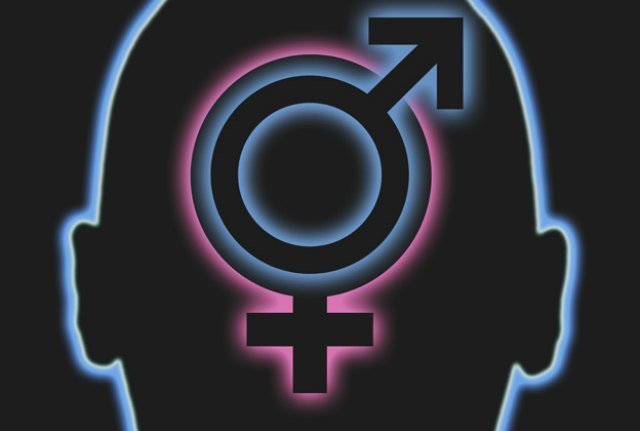
A transgender brain?

When I think back on my childhood now, I can see signs that I was trans starting from a very young age. A lot of my early pretend-play with my sister revolved around us both being runaway princesses or fairies or mermaids (my personal favorite). I didn’t really think that was odd when I was young enough to not have the full weight of masculinity weighing on me. And I had somewhat of an advantage in being outside of the typical school environment where a lot of gender is enforced. I was homeschooled and most of that play happened when my mom was distracted with my younger brother’s birth and early years.

All my life, my closest friends have been girls (or at least we all thought they were at the time but it turns out at least one was also nonbinary). And as I got older I started to realize the reason I sought out those relationships was because it was so much easier for me to communicate and relate to them. Around puberty I began internally bemoaning my “weird brain,” even then I knew there was more to it than me just being an odd kid. I remember feeling distinctly like my brain worked more like a girl’s than the stereotypes I heard about male brains or the ways I heard boys in my life talk about them.

Puberty was a very angsty time for me, as is often true of a trans narrative. But it revolved less around my anatomy and more around my brain and way of relating to people. It didn’t help that my parents started worrying about how much time I was spending alone with girls and trying to restrict our activity. They gently pushed me towards making more male friends and doing more typical boy activities. I was extremely emotional but as I became more steeped in masculinity that became less and less acceptable. So instead my emotions were pushed down and funneled into anger. I was a pretty unpleasant teen at times because of it.

Are those all signs that I was trans or just that I didn’t fully buy into masculinity? It is hard to say. Since I didn’t have access to information about the existence of trans people much less concepts of nonbinary gender, I never developed that framework for thinking about it. I do know that around 16 I started wishing quite often that I could snap my fingers and change myself into a girl but that was only partly about anatomy and just as much about escaping masculinity pressure. The idea of taking steps towards changing my gender with the body I had never crossed my mind, not that I knew it was possible. But my dreams often involved me having all the genitals in one body.

In regards to my sexuality it never even crossed my mind that I might be queer. The negative messaging around that was so strong that I avoided any train of thought even remotely leading in that direction. At one point that fear was so strong that I stopped watching any porn with penises because I worried that liking it might make me gay. Also because the masculinity most porn I could access showed felt repulsive to me in the same way that most of the boys I was around disgusted me. Even today, the aggressiveness that comes along with masculinity is a big turn off to me and a big reason I have a hard time approaching cis men who I find attractive.

The point of this story is that the stereotypical story of knowing your gender or sexuality at an early age isn’t true for everyone. And the reasons are complicated. I truly believe that not all people are “born that way” and sometimes gender and sexuality change over your lifetime. And even if I have always been nonbinary, which I think is likely, it is ok to discover that later in life. It doesn’t make you any less trans or queer. This is a good post on the topic for more reading.

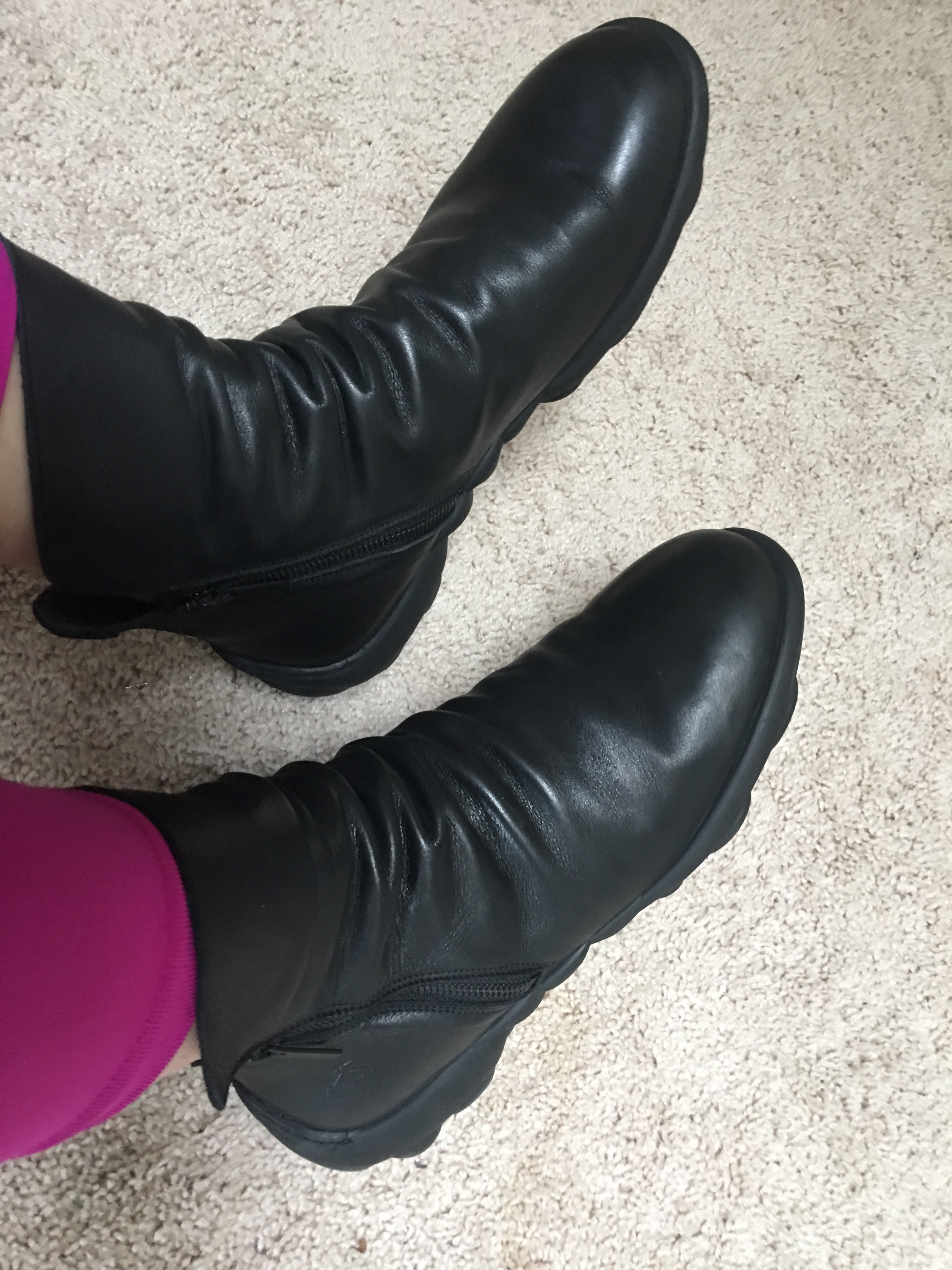
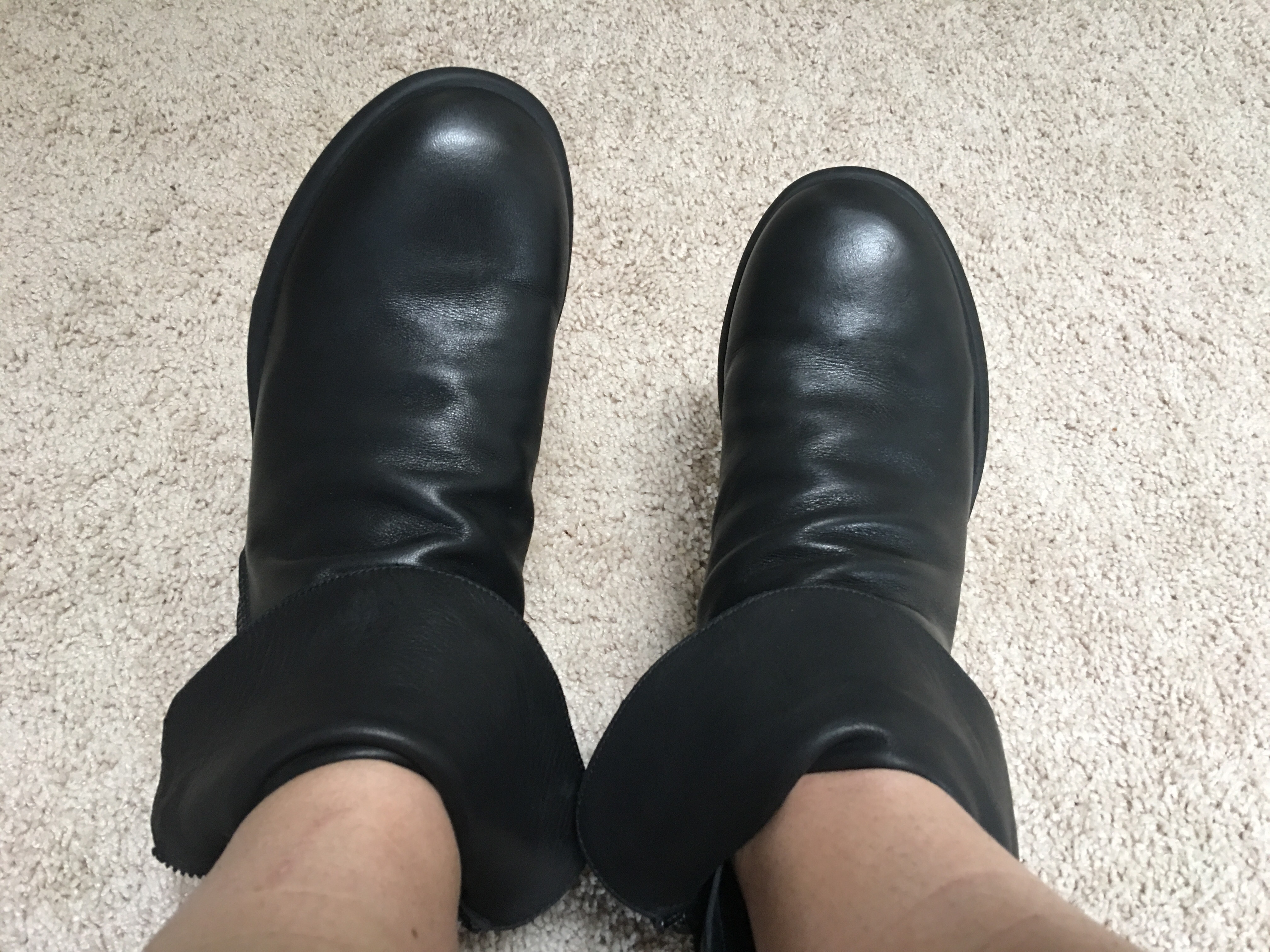
Boots!

I finally invested in a couple of really nice boots. So hard to find in my size but there was one pair at Nordstrom and an all gender one at Fluevog. 

Am I really Nonbinary?

gender-questioningIn between all the politics, I’ve been spending a lot of mental energy lately thinking about the most difficult question in my life so far. Am I nonbinary because that is who I truly feel like I am or is it a compromise because I don’t feel like I can access womanhood in the way I want?

At times I definitely feel a very strong sense of a gender that is clearly not masculine or feminine but exists as a tangible middle ground. Very genderfull instead of agender. And as I’ve said, there are things I like about being in the middle such as having a beard.

But there are definitely parts of me that at times can feel very strongly that all I want to be is a woman with everything that goes along with that. Since I was a teen I’ve consistently wished I could just snap my fingers and make that happen. But the reality is that I need to make a choice. Do I want that badly enough to accept all the costs, challenges, and risks of medical transition?

What I do know is that I have a lot of fear about the path towards that and still not feeling like it is enough once I’ve gone as far as money/science allows. What I want more than anything is the ability to bear a child. But even assuming they were willing to do uterine transplants on trans women, that still would require a C section and a whole lot of money. I want to have breasts and the kind of chest that I can be proud of in the mirror. And I want a vagina and a clit and the ability to have multiple orgasms. But every time I think about what it would take to get there, I question how badly I want those.

First of all there is the money part. How can I justify spending that much money on myself when there are so many urgent problems that need solving? But I know that is a double standard because when it comes to other people I’m all for helping them get that surgery. Secondly there is weathering the awkward part of transition where I haven’t gotten there yet but it’s too late to turn back. And then of course there is the social risk because I’m pretty sure I could never pass even if I wanted to. And now more than ever that is becoming a dangerous thing.

A few months ago my plan was to start a hormonal transition in the next couple years after having a baby with my anchor partner. That would permanently give me feminine breasts as well as at least temporarily allow me to see how I like my brain on estrogen along with the softer skin and more feminine distribution of body fat (less belly, more hips). But now I feel very unsure about doing that until a certain demigogue is out of office. I still have the ability to hide as pass as male if I need to which would be much harder once I start down that path.

Part of why this is weighing on my mind more is because of politics certainly. The world is a very unsafe place at the moment for a trans person and it feels like a lot of doors are starting to close making me feel more claustrophobic and without the options as accessible to my explorations. And part of that is probably my upcoming wedding. When I imagine myself in a wedding dress I have a hard time imagining that in my current body. That moment more than any is where I wish I was less hairy, had a smaller frame, had hips, and most of all, some cleavage to speak of.

This weekend I’m going with some trusted friends to try on some wedding dresses. I’m trying to brace myself for the dysphoria that is almost certain to arise. I’ll try to report back how it goes and maybe even share some photos.

For now I know I don’t need to have answers to these questions. But I sure am getting tired of shedding tears over them so often.