Reflecting on 8 years of being professionally trans

Today’s my work anniversary. I’ve been at my current company now for 8 years which is also how long I’ve been out as trans at work. So here’s a bit of reflection on my professional life so far.

When I started in 2016, I was still closeted at work. I was dressing femme on evenings and weekends but I hadn’t gotten the courage to come out in a workplace setting before so I decided to interview as presumed cis in order to try to get the job. I probably just came off as very gay.

As I was being introduced as he/him on my first day it felt increasingly uncomfortable with each intro so the moment I had some time at my desk, I emailed my supervisor and 2 immediate peers and told them that I was nonbinary and used they/them (at the time). I was terrified, but was immediately met with affirming responses and attempts to use my pronouns correctly from there on. My supervisor became one of my biggest supporters, even though she had no previous experience with trans folks. That was exactly how a professional workplace should react. She had some slight hesitation as I started to dress femme but quickly corrected course and affirmed and advised my new professional wardrobe.

However, in the background, I found out later that she was also protecting me from tokenization. She had approached HR to see how to best support me and they didn’t have any resources but they did immediately want to use me to teach them what to do. She told me this much later after I had decided (on my own) to step into a volunteer DEI (Diversity, Equity, and Inclusion) leadership position. I’m also thankful for her actions to keep me from being tokenized.

In 2018, the company hired their first DEI professional. She was an excellent leader and pretty quickly opened up invitations for staff to create additional Employee Resource Groups (ERGs) rather than a single catch-all Diversity Council. At her encouragement, I co-founded an LGBTQ ERG which blossomed into a lovely community of support, community, and advocacy for better internal policies. We had a great 2 years where we were affirmed and supported by her and her team. We hired consultants and taught some very well attended Trans 101 courses.

At the beginning of 2019, I moved to the team that I had originally come to the company hoping to join. An amazing team where everyone was already well trained on how to support and affirm trans people as research participants and I didn’t have to do any education or self-advocacy. I continued to lead the ERG and 2019 was a great year at work.

However, in 2020, things started to take a turn for the worse, and I don’t just mean the pandemic. The company hired a DEI Vice President who quickly turned the department into a “my way or the highway” mentality. He started making more and more stringent requirements of the ERGs, essentially trying to turn us into social clubs and take away any ability to advocate.

As an example, we had been working for over a year to develop a Trans 201 level workshop to do what the 101 course recipients had requested which was follow up on how to apply this knowledge to their internal and external work. We had contracted with Gender Justice League and were poised to launch in-person when the pandemic hit. After a few months, we pivoted to planning a virtual workshop and had a date scheduled. Suddenly the DEI team came in and shut down our work, cancelling the workshop without so much as a warning or explanation. When asked why, they said “we are no longer doing didactic classroom trainings” and refused to listen to how this workshop did not fit that model. They also refused to discuss how to move forward with the Trans Inclusion training that was so desperately needed.

When I continued to push on it, I was met with rather extreme anger and accusations from the staff member. I requested a third party mediator several times but was instead called into a meeting with the VP and HR where he threatened my job and told me that if I ever interacted that way with his staff again, he would have me fired. It became clear to me at that moment that the only way to preserve my job and sanity was to step back from doing the DEI work I loved so much. I immediately stepped down as ERG leader with great sadness.

I continued to engage in the ERG as a member for awhile and when I heard that the company had once again denied our request to build gender-neutral restrooms, I stepped up to attempt to intervene. We had been requesting these restrooms since our founding in 2018 and by 2022 it was becoming untenable to continue waiting. So I gathered a team of trans and cis staff and requested a meeting with the President of the company and was denied multiple times. He continued to push me to go through the VP who had threatened my job and was the barrier to not getting the restrooms prioritized.

When it was clear that we couldn’t meet directly with the President, I instead authored an open letter and started passing it around internally for signatures. As soon as the VP got wind of it, he again called me into a meeting and threatened and bullied me again. Shortly thereafter however, they announced the gender neutral bathroom project which he then claimed he had been working on the whole time (apparently without telling the entire accessibility committee). That for me was the final straw.

At this point I engage only in my direct teams’ work. I keep my head down and try to survive. I don’t feel like I can thrive at work because it is clear that the culture of the company is hostile towards trans activism. And without activism, we can never move forward towards a culture of inclusion. They also issued a very racist, both-sideism statement on Israel and Palestine that further shut down my participation. While it is a well paying job and many of the teams are individually great allies, I don’t feel like I can really recommend the company anymore which is very disappointing.
(Re)starting Vocal Feminization

Yesterday I made the plunge and signed up for a vocal feminization course through Undead Voice Lab. I met the voice coach at Trans Pride Seattle and decided that now was as good a time as any to restart that work. It’s expensive but I was able to get a partial scholarship to make the monthly payments more affordable.

I tried working with a trans voice coach once before a few years ago but I ended up stopping because I was experiencing so much dysphoria from hyperfixating on how masculine my voice sounded. It is easy to ignore most of the time but if I think about my voice too much, it becomes overwhelming quickly. At that point I was in the middle of my physical transition and it was just a lot to handle at once. So I put that work on hold.

My roommate asked me yesterday why I was doing this work and I realized as I answered that it isn’t as much about my own dysphoria around my voice but rather about other’s perception of me. I get misgendered on the phone so often or don’t have people take me seriously in person, ostensibly because of my voice, and that misperception is what causes the dysphoria. If we lived in a perfect world where people didn’t make assumptions about you because of your vocal pitch, I probably wouldn’t put in the effort.

This time around I think I’m in a better place to do the work. I’ve finished my physical transition and have fewer areas that cause dysphoria on a daily basis. I’ve also done a lot of work in therapy to be able to approach this more non-judgmentally and just accept the pace at which I’m able to work. I know this is more of a marathon than a sprint.

If I really focus on it, I have the skills to feminize my voice but I’m not sure if I’m doing it sustainably. I also don’t want to have to always focus that hard on it so the real work is creating something that is effortless and natural and doesn’t take conscious effort every time. Fingers crossed that that is something I can achieve this time around.

I am valuable just by existing

I just had the most amazing EMDR therapy session that I have to gush about!

One of the strongest messages that I’ve gotten through my early life is that my primary value and purpose in life is to help others. It first came from my parents who are both incredibly helpful people to their communities and find a lot of purpose in that. And then it came from my ex wife who had a much more toxic view where my primary job was to serve her and make her comfortable at my own expense including doing very public acts of service to make us look good as a couple.

I don’t think my parents taught me that with any malicious intent. It came from their deep desire to be of service to the people around them. But the message I took away from it was that if I wasn’t productive or useful enough to others, I wasn’t valuable, either to God or to other people.

Ever since then, I have really struggled with that internal messaging, especially as my disabilities have gotten worse and prevented me from helping others using my physical strength in the same way. And as I have been trying to get this choir off the ground, it has been a constant battle for me internally to want to give more of myself than I am capable of. Especially when my mental health is worst during the winter, I tend to feel like I am a failure and have let everyone down if I can’t get the funding together to make this choir successful.

So today, my therapist and I decided to finally tackle that deep rooted belief through Eye Movement Desensitization and Reprocessing (or rather tapping in this case) therapy. We started by analyzing the difference between my stated belief that a person has inherent value that isn’t tied to their productivity and the feelings in my body that tell me I have to keep being useful in order to have value. Then we went into my mental safe space, which in my case is a children’s blanket fort. Next we started diving into the feelings about the phrase “I am only valuable when I am doing things for others” in small chunks, while tapping my leg bilaterally with my eyes closed.

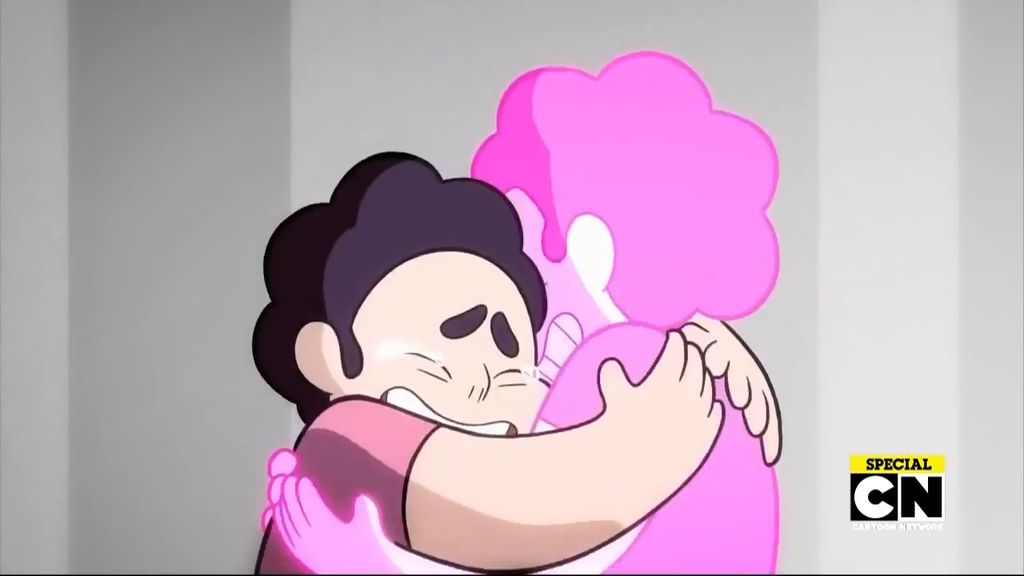
At first I was envisioning a physical wresting match between my logic and my emotions; a divide which had been hammered into me by my ex. But on second pass, that fight turned into a hug where my heart and my brain hugged each other. It reminded me a lot of the show Steven Universe where a major theme of the show is Steven diffusing fights by taking the time to understand the other’s feelings. By the third pass, I felt almost zen about the phrase and had a sense of inner calm. And by the time we got to the inverse phrase “I am valuable even when I’m not productive”, I could envision the cracks in my heart knitting together and healing, almost like the gem fragments at the heart of the Earth being bubbled by Steven.

Finally, at the end of the session, I could almost feel a physical presence where a part of my own self was hugging me and healing my broken parts. Very much like the final episode of Steven Universe. It made me want to reach out to my mom and help her feel that same acceptance and peace through understanding.

I know that I’m not magically healed and that these feelings will continue to come up. But I also know that now I have the tools and vivid memory of that moment to help me combat them. I feel confident that next time I’m feeling down because I ran out of energy to be productive or my body is getting in the way of being useful in the ways I want, I won’t beat myself up for it. I can be at peace with where I am at and accept the love and support of the people around me.

So if you’re feeling down, especially in this cruel world that is so hard on trans folk like us, please remember that you are valuable just by existing. Your existence and joy is revolutionary!

How my gender journey impacted my career path

I’ve been asked at work to be on a small, diverse team of people from my department who will be welcoming a group of high school students for a field trip to learn about career opportunities in research and science. And as I’ve been thinking about what stories I’m going to tell, it made me realize just how much my gender and transition journey has shaped where my career pathway has led.

First off, how did I get into a career in science? I’ve always been interested in science from a young age. My favorite shows as a kid were Bill Nye the Science Guy and Kratts’ Creatures. I loved learning about animals in particular and my earliest career aspiration was to become a zookeeper; a dream I held on to for many many years.

When I was 7 we moved to a house on what was at that time the border between the suburbs and rural farming country. It was one of the oldest plots of land in the development so it came with 3 acres of 70 year old forest that used to be logging territory. That experience was absolutely magical for me. I spent most of my time as a kid running around and learning intimately how a healthy PNW forest ecosystem looked and felt. So when it came time for college, I decided that instead of studying zoology, I would go into ecology so that I can learn about the whole system instead of just the animals.

My time in college, other than my early marriage and the homophobic institution I was studying at, was incredibly enriching. I loved school (well except the theoretical math part) and I was incredibly lucky to have an amazing team of professors who were deeply passionate about their jobs and field. I got to do lots of cool lab classes and I spent about 7 weeks studying at a field station in the San Juan Islands and a study abroad trip to the Galapagos Islands.

I volunteered at the Zoo during college but by the time I graduated, I had come to realize that I didn’t have the patience to deal with a job that was becoming increasingly competitive, controversial, and underpaid. I wanted to go on to a research position in ecology but this was right after the 2008 recession and jobs were scarce. The only things I could find were “room and board” type positions in remote areas.

With my marriage being the mess that it was, I didn’t feel like I could leave to pursue the career I wanted. And I didn’t have the energy to go on to more schooling because I had so many unresolved relationship issues and identity crisis dilemmas. So I decided to turn to my other skills.

Through college, I had been supporting myself by working as an office assistant at a couple of the school departments and a local nonprofit. So after work study ended, I decided to get a receptionist job. I don’t think it was a mistake that the first job I ended up in in a highly femininized field at a vet clinic where I was the only “man”.

My 20s were a mess. While most of my classmates were off getting Masters, PhDs, and MDs, I felt stuck trying to figure out my life. I spent from age 20 to 26 in a relationship that was slowly and traumatically imploding, trying desperately to make it work. At 26 I finally realized that I was trans, but my partner wouldn’t let me come out to my friends and family so I had to stay in the closet for another few months while I worked up the courage and resources to get out.

Finally at 27, I was free and could start figuring out who I truly was without the baggage of being forced to be someone I wasn’t in so many ways. I started writing this blog when I was 28 and that proved to be really helpful to my transition and I started hormones a month before my 30th birthday. That’s when I feel like my adulthood truly started.

Back to my career though. I had a few different administrative jobs through my 20s that were mostly really good experiences where I was allowed to grow and get promoted internally. Which was great. But I still wasn’t working in science.

In 2015, shortly after I first came out as genderqueer, I joined a research study for an experimental HIV vaccine. I heard about it through an old classmate at Trans Pride Seattle and thought I might as well contribute to science and make a few much needed bucks for participating. I wasn’t sure what to expect in terms of inclusivity but I found myself really impressed by the study team and paperwork. It was really the first time I felt seen and respected in a clinical setting as a trans person. I had such a good experience on the study that when I finished, I decided to see if I could get a job at the company that ran the trials.

I landed a job at Fred Hutch shortly before I started this blog and it was my first professional coming out experience. It went well and even though I wasn’t working on HIV vaccines at first, I loved getting my toes wet in the administrative side of science. Eventually I applied internally and got a job with the HIV Vaccine Trials Network where I still work today.

Today I’m really thankful to be able to contribute in meaningful ways to scientific research, even though I don’t have an advanced degree or specialized technical training. My eventual dream is to find a way to work on more targeted research on the health disparities impacting the transgender and nonbinary community. Now that I’m a project manager, I hope to partner with a research investigator to be a subject matter expert on identifying the many gaps that still exist in the science around trans healthcare.

I know that was a long story but I just want to say that no matter how long it takes you to come out, you can still find success and fulfillment in your career. Sometimes life gets in the way of advanced degrees, but there are lots of ways to contribute to specialized fields like science and many paths to get there.

Why is gender affirming care so expensive?

I’ve written quite a bit about the costs that I have incurred along my journey of trying to inhabit a trans body. But even as I look forward to the upcoming revision surgery on my vulva, it is a harsh awakening to realize that I am going to have to spend yet another $6,000+ for housing simply because Seattle has no transgender vaginoplasty surgeons and most insurance refuses to pay for out of state surgery costs.

So how much have I paid out of pocket so far for gender affirming care?

  • $5,000+ for electrolysis and laser hair removal on my face and body (not considered “essential” by insurance)
  • $9,500 in travel costs for consults, surgical recovery housing, and post-op appointments
  • $6,000+ for housing for revision surgery recovery

All told, I can account for over $20,000 in costs that insurance refused to cover.

I am one of the lucky ones. I am privileged enough to have a good job with decent health insurance so my co-pays are minor and I can afford to save up for these procedures. And I have a large network of friends who have generously donated over $5,000 towards those costs.

But can we talk about why these costs exist in the first place? Why is it considered ok for transfeminine people to have to pay for face and body hair removal to deal with dysphoria? In a world that demands that we “pass” as women to use public facilities such as restrooms, that is incredibly classist and discriminatory. And why does insurance not have to pay for the costs of getting an out of town surgery when there are no local surgeons available? My insurance now pays for cancer patients to get out of town specialty care but despite my advocacy for the past several years, continues to deny trans people that same right.

Luckily, starting in 2022, insurers in Washington State are now going to be required to pay for all doctor-prescribed gender affirming treatments and will no longer be allowed to label them as “cosmetic”. This is thanks to the tireless work of many many advocates and organizations who fought for years against insurance denials. And I hear through the trans rumor grapevine that Seattle may FINALLY be getting a surgeon soon who can perform vaginoplasties locally. But while that helps people here in Seattle, that doesn’t change the fact that far too many trans people around the US aren’t given equal healthcare access. We need laws in place federally to mandate coverage of gender-affirming care.

So next time you think of asking someone if they have had “the surgery” or make any kinds of assumptions about what trans people should look like, think about how expensive it is to look like I do. How inaccessible it is to the vast majority of trans people in this country to achieve what Laverne Cox, Caitlyn Jenner, and Elliot Page have done. And if you have resources, I encourage you to donate generously to your local trans fundraisers and places like the Jim Collins Foundation to help more trans people get the care we so desperately need.

Smelling like a girl

3 years later and still, one of my favorite parts about being on estrogen is that even when I’m sweaty and gross I still smell like a girl! It was one of the first changes I noticed and one of the most psychologically beneficial for my dysphoria.

BMI Cutoffs are unscientific and harmful

As I’ve written about before, BMI (Body Mass Index) is an unscientific concept that is often used to deny trans people life-saving surgeries. It is treated by far too many surgeons as medical fact, despite the vast body of evidence that it is wildly inaccurate, scientifically useless, and never intended by the creator to be used on an individual basis.

Recently, the only surgeon in Washington State, Geoffrey Stiller, formerly one of the few surgeons who would accept fat patients, updated his policies quietly to exclude people over the arbitrary and oft-used cutoff of 35 BMI. That means that at least two people close to me are now being denied gender affirming surgery without so much as a notification about the change. So I wanted to take the opportunity to share some scientific research recently published on the topic.

  1. Recent research shows that there is no correlation between BMI and surgical complication rates in trans people in either vaginoplasty (bottom surgery) or mastectomy (top surgery)
  2. “Obesity” (aka normal body variation) is very common in trans people seeking surgery (26% at Mount Sinai) and did not change despite efforts to lose weight prior to surgery
  3. BMI is not an empirically based method of denying gender-affirming surgery

Trans people should not have to bear the burden of educating providers about our care but all too often we are put in that position anyway. So next time a surgeon tells you they won’t perform surgery because of “policies”, please feel free to use this research to push back on them. Even if you don’t win a single conversation, hopefully you will plant a seed and prompt them to actually read the scientific literature on the topic. I found these articles with only a cursory review of the topic and I’m not even a doctor.

Citations

  1. Ives GC, Fein LA, Finch L, Sluiter EC, Lane M, Kuzon WM, Salgado CJ. Evaluation of BMI as a Risk Factor for Complications following Gender-affirming Penile Inversion Vaginoplasty. Plast Reconstr Surg Glob Open. 2019 Mar 13;7(3):e2097. doi: 10.1097/GOX.0000000000002097. PMID: 31044103; PMCID: PMC6467628.
  2. Rothenberg KA, Gologorsky RC, Hojilla JC, Yokoo KM. Obesity is Not Associated with Complications or Revisions after Gender-Affirming Mastectomy in Transgender Patients. Plastic and Maxillofacial Surgery. 2019 Oct 1;229(4):sup1. doi: https://doi.org/10.1016/j.jamcollsurg.2019.08.494
  3. Martinson TG, Ramachandran S, Lindner R, Reisman T, Safer JD. HIGH BODY MASS INDEX IS A SIGNIFICANT BARRIER TO GENDER-CONFIRMATION SURGERY FOR TRANSGENDER AND GENDER-NONBINARY INDIVIDUALS. Endocr Pract. 2020 Jan;26(1):6-15. doi: 10.4158/EP-2019-0345. Epub 2019 Aug 28. PMID: 31461357.
  4. Lisa M. Brownstone, Jaclyn DeRieux, Devin A. Kelly, Lanie J. Sumlin, and Jennifer L. Gaudiani. Transgender Health. ahead of printhttp://doi.org/10.1089/trgh.2020.0068

Rarely Shaving

I shaved this weekend for the first time in 3 months and all I got was some fuzz! I mean I occasionally have to pluck but so do most women. It’s really incredible to go from a thick, full beard to basically nothing in just over two years. It was expensive and painful but so worth it. Not shaving is such a relief and not having the dark stubble in photos means I’m a million times more likely to feel beautiful.

My past is like another life

Sometimes I look at photos of me from my past and think, “damn, that person was sexy.” Not as in a “I wish I was still that person way” but more of a “if that was a stranger, I would date them.” It is such a mind trip to have most of my previous photos feel like they are a completely different person. I’m glad I’ve evolved into more of the person I want to be, and yet it is still so weird to think how recent that shift into feeling like myself has been.

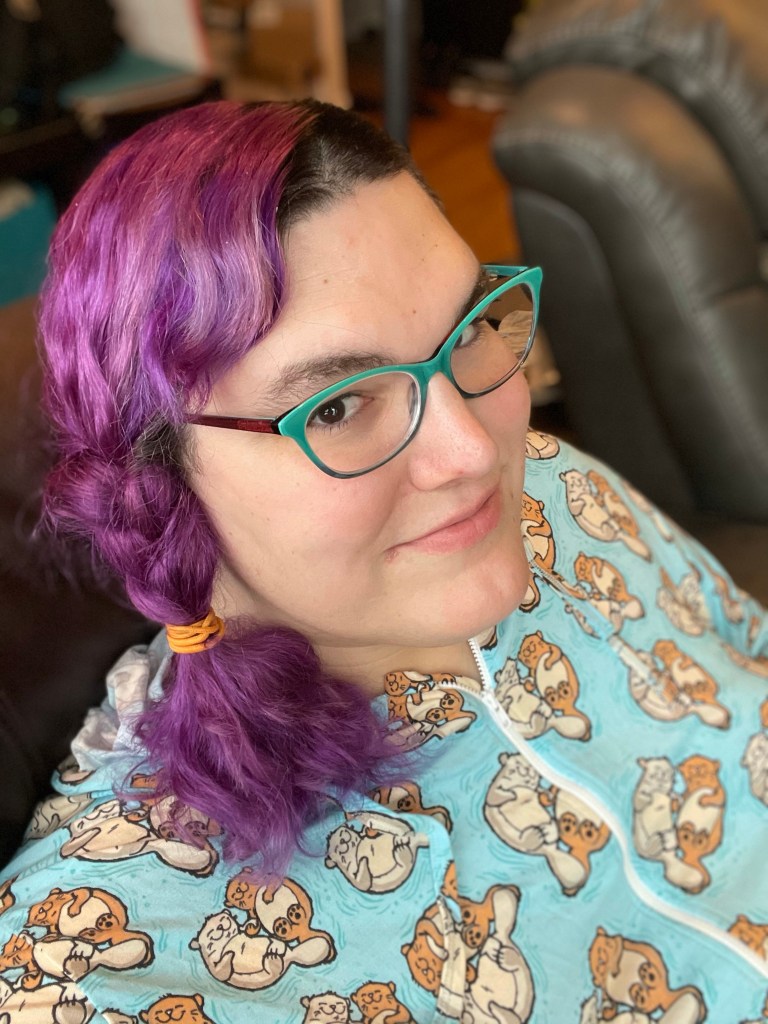
Braided Hair

As a child, I longed to be one of the girls. I spent a lot of time wistfully watching my sister and her friends braiding each other’s hair and wishing that I could do that too. Both because I liked girls and because I wanted to be one.

As an adult, I’ve definitely been sad that I missed out on all those practice years. That I didn’t get the training in hair care that comes with girlhood. But today, I decided to look up instructions and try to braid my own hair.

It’s messy and loose but I finally tried it and the good news is it can only get better from here.